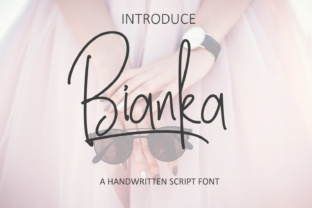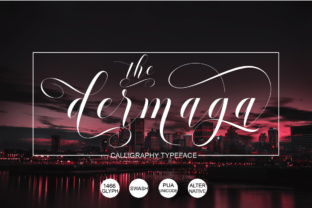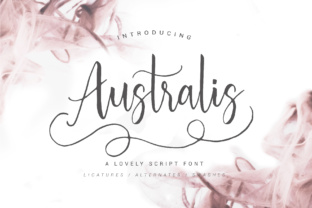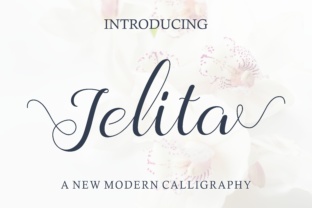
Solidaritha Font: Elegant Calligraphy for Handmade Products
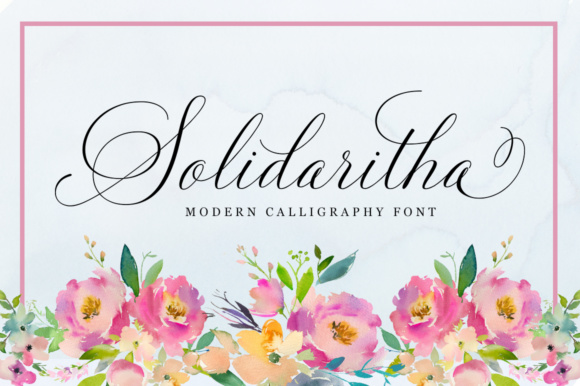
If you have spent any time searching for a script that brings genuine movement to your projects, you know how rare it is to find a typeface that feels both polished and lively. Solidaritha delivers exactly that. This stylish calligraphy font features a varying, dancing baseline that gives every word an elegant, hand-lettered feel. As someone who creates physical products for a living, I have tested dozens of script fonts over the years. Very few manage to balance beauty with practical usability the way Solidaritha does. It looks exemplary in invitationals, but its real strength lies in how naturally it adapts to labels, stickers, signage, packaging, and digital printables.
What Makes Solidaritha Stand Out in a Craft Workspace
The first thing you notice about Solidaritha is the baseline. Instead of sitting flat and rigid, each letter rises and falls with a gentle rhythm. That dancing motion is what gives your products a handmade, human touch. For a small shop owner, this matters more than most people realize. When a customer picks up a candle with a script label that has genuine flow, they perceive care and quality. Solidaritha creates that impression without requiring you to hand-letter every piece. It brings the charm of calligraphy into your production workflow at the speed of a few clicks.
Visually, Solidaritha sits comfortably in the Script Amp category. It is a true script font with connected letters, graceful loops, and elegant swashes. The strokes have a natural contrast—thin upstrokes and thicker downstrokes—that makes text feel dimensional even when printed flat. This makes it an excellent choice for display use on product packaging, tags, and signage where you want the font to act as a design asset rather than just text.
Real Projects Where Solidaritha Shines
I have used Solidaritha across several product lines in my own shop, and it consistently outperforms other scripts in customer feedback. Here are some of the most effective applications I have found:
- Candle and soap labels – The dancing baseline adds movement to small rectangular labels. Solidaritha reads well at moderate sizes, and the elegant loops give bath and body products a boutique feel.
- Wedding invitations and stationery – Given the font’s invitational DNA, this is a natural fit. Pair it with a clean sans serif for the details block, and Solidaritha handles the couple’s names and the main event line beautifully.
- Farmhouse signs and wall art – For wood signs or framed prints, short phrases in Solidaritha create a sophisticated rustic look. The varying baseline keeps the design from feeling stiff, which is exactly what farmhouse decor needs.
- Product tags for boutique clothing – Hang tags with a brand name or care instruction set in Solidaritha elevate the unboxing experience. Customers often keep these tags as bookmarks or decorative pieces.
- Seasonal packaging and gift tags – Holiday phrases like “Merry Christmas” or “Happy Holidays” take on a graceful, hand-tied appearance. The script style pairs naturally with twine, kraft paper, and wax seals.
- Planner pages and digital printables – For title headers on weekly spreads or decorative quotes, Solidaritha adds a touch of elegance without overwhelming the page. It works especially well in short bursts—think headers, section titles, and accent words.
Readability and Practical Considerations for Cutting Machines
One concern crafters often have with script fonts is how well they perform on cutting machines like Cricut or Silhouette. Solidaritha handles this well because the letterforms are clearly defined. The loops stay open enough that blades can follow the paths cleanly, and the varying baseline does not cause overlapping issues if you space the letters carefully. For vinyl decals on mugs, shirts, or tote bags, I recommend keeping phrases to three or four words maximum. This font is designed for display purposes, and shorter text allows the elegant letter shapes to breathe.
For small stickers—think inch-wide product labels or envelope seals—test the font at your target size before committing. I have found that Solidaritha remains readable down to around 10 point, but its true charm appears at 14 point and above, where the dancing baseline and stroke contrast become clearly visible. For tiny text blocks, consider pairing it with a simpler sans serif or serif font for the secondary information.
Font Pairing Ideas That Work with Solidaritha
Since Solidaritha carries a strong personality, pairing it with a neutral counterpart creates balanced, professional designs. Here are combinations I have tested in my own product lines:
- Solidaritha with a clean sans serif – Fonts like Montserrat, Lato, or Open Sans keep the layout grounded. Use the sans serif for addresses, dates, pricing, or fine print, and let Solidaritha handle the headline or brand name.
- Solidaritha with a simple serif – A classic serif like Playfair Display or Georgia adds contrast without competing. This pairing works beautifully for wedding stationery or premium product packaging where you want an upscale editorial feel.
- Solidaritha with a modern handwritten font – If your brand voice is playful and artistic, combining Solidaritha with a looser handwritten style creates a layered, scrapbook aesthetic. Use this for social media graphics, planner stickers, or children’s product lines.
When pairing, remember that Solidaritha is the star. Let it lead the design, and keep the secondary font simple. Avoid pairing two elaborate scripts—they will fight for attention and muddy your layout.
What to Check in the Font Package
Before you purchase and download Solidaritha, take a moment to review what is included in the package. A quality script font like this typically offers standard letterforms along with alternates, ligatures, and swashes that extend the design possibilities. Look for OpenType features if you use design software like Adobe Illustrator or Affinity Designer. These features let you access alternate glyphs and contextual ligatures that make the text flow even more naturally.
Also check the file formats. Most premium fonts include OTF and TTF versions. For cutting machines, TTF is usually the safer choice. For professional design work, OTF gives you access to advanced typographic features. If you plan to use Solidaritha for web design or social media graphics, a web font version may also be available or you can convert it through your font management platform. Multilingual support is another consideration—if you sell to an international audience, confirm that the font covers the accented characters you need.
Commercial Licensing and Selling Products with Solidaritha
This is the part that every handmade seller needs to take seriously. If you plan to use Solidaritha on physical products for sale—whether that is candles, shirts, mugs, signs, or packaged goods—you must purchase a commercial license. Most font foundries offer different tiers: a desktop license for personal projects and a commercial license for selling items made with the font. Some licenses also cover digital products like printable templates, SVG designs, and digital downloads.
Read the license agreement carefully. Some commercial licenses cap the number of sales or impressions. Others are unlimited. If you create templates or printables that include Solidaritha as part of the design, check whether the license allows you to pass the font along in a flattened, non-editable format like PDF or PNG. For editable templates, you typically cannot embed the font file itself unless you have an extended license that covers redistribution.
I recommend keeping a folder with all your font licenses organized by purchase date and source. When a customer asks about branding consistency or if you expand your product line, you will have clear documentation of what you are allowed to do. Solidaritha is a premium font worth investing in, and the right license protects both you and the designer.
How Solidaritha Affects Product Presentation and Brand Identity
Typography is one of the most underrated tools in product branding. A font like Solidaritha tells your customer that you care about details. When your labels and tags use consistent, elegant lettering, shoppers begin to recognize your brand at a glance. That recognition builds trust and repeat purchases. I have noticed that products using Solidaritha for their primary branding tend to photograph well for online listings. The dancing baseline adds visual interest even in thumbnail images, and the elegant curves soften the overall look of the product shot.
For social media graphics, Solidaritha works beautifully on quote cards, product announcements, and sale banners. It gives your feed a cohesive, curated feel without requiring advanced design skills. Simply place your headline in Solidaritha against a clean background, and the font does the heavy lifting.
If you are building a brand identity from scratch or refreshing an existing product line, consider making Solidaritha your signature display font. Use it consistently across packaging, tags, signage, and digital assets. Over time, customers will associate that graceful, dancing script with the quality of your handmade goods. That kind of emotional connection is hard to manufacture—but a carefully chosen typeface can help you build it naturally.
Solidaritha gives you the freedom to create products that feel personal and polished at the same time. Whether you are designing wedding invitations, boutique product tags, or farmhouse wall art, this calligraphy font brings the elegance of hand-lettering into your everyday workflow. With the right pairings, a solid understanding of its features, and proper licensing, you can use Solidaritha to elevate every project that leaves your shop.